

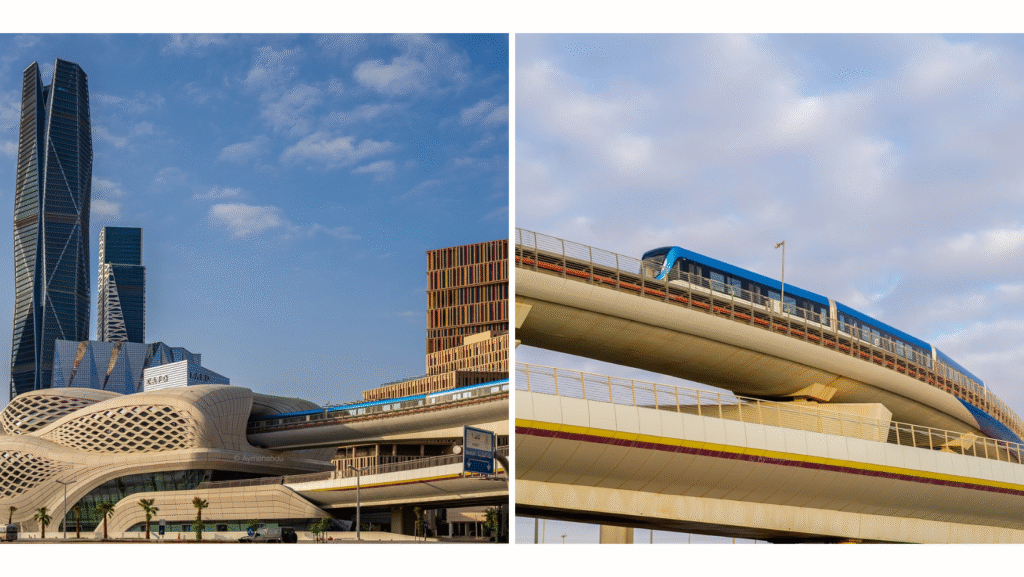







The Royal Commission for Riyadh City announced that the Riyadh Metro has recorded 200 million passenger journeys since operations began, marking a significant achievement in the development of the city’s public transport network.
The milestone was reached only months after the system surpassed 100 million passengers, reflecting steady and sustained growth in ridership across all six lines.
Officials stated that the increase demonstrates strong passenger demand and confidence in the metro as a reliable and efficient mode of transportation. The Blue Line, which runs along Olaya Street, accounts for the largest share of journeys at approximately 45 percent. It is followed by the Red Line along King Abdullah Road with 16 percent and the Orange Line on Al Madinah Al Munawwarah Road with around 14 percent. The remaining lines have also experienced consistent growth as the network expands its coverage and connectivity across different districts of Riyadh.
View this post on Instagram
Operational data shows that the metro has traveled a combined distance of about 32.2 million kilometres and completed roughly 1.13 million train trips. The system has maintained a service availability rate of more than 99.8 percent, highlighting its operational efficiency and reliability. These figures demonstrate the scale of activity taking place across the network and the commitment to maintaining high standards of service.
Several stations have recorded higher passenger volumes, particularly major interchange hubs such as Qasr Al Hukm, STC, KAFD, and the National Museum. These stations play an important role in allowing passengers to transfer between lines and connect to other parts of the transport network. Their strategic locations make them key points in supporting smoother travel experiences throughout the city.
The continued expansion of public transport infrastructure aligns with broader urban mobility initiatives aimed at improving transportation options and managing traffic growth in the capital. The metro system forms a central part of Riyadh’s long term development plans and supports wider objectives under Saudi Vision 2030. As ridership continues to grow, the network is expected to play an increasingly important role in shaping the future of mobility in the city.